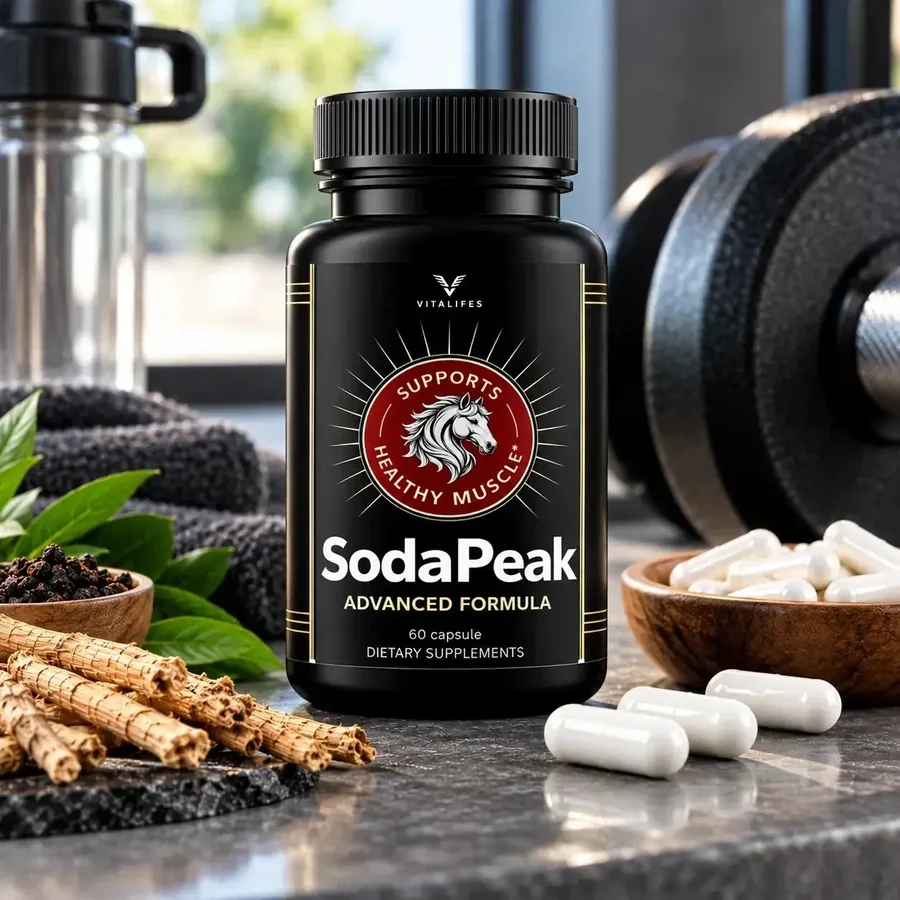
Three longer pieces about the mechanics of a supplement label. They are the general version of what the rest of this site does to one particular bottle: divide a total by a position number and see what the answer forbids.
Three pieces on the arithmetic of a proprietary blend: what a ceiling is and how to work one out, where the word “proprietary” came from and what the rule still requires, and why the fourth position on a label settles more than the first one does.
Each post stands on its own and ends at the sources it used. The method in all three works on any blend on any shelf, not only on the bottle the rest of this site is about.
Reading
The posts
Newest first. Each one stands on its own, and each one ends where the product pages begin.
The SodaPeak panel has no vinegar, juice powder or sugar. If your label lists them, it is a different product. Five checks for the bottle in your hand, and what to do next.
Third of eight caps saw palmetto at 400 mg per 2 capsules. Room for the 320 mg trial dose at two capsules, none at one, and a research record about the prostate, not muscle.
Second of eight allows up to 600 mg, well above the 100 mg trial dose. But the label prints a powder, not a standardized extract, and no figure to compare.
A proprietary blend gives one total for a list of names. The order those names are printed in turns that single figure into a separate upper bound for every one of them — with a worked illustration, and the real case on this label.
Where the proprietary blend came from, what the regulation actually permits, the trade-secret argument taken on its own terms, and the five things a seller could publish tomorrow without giving away a ratio.
The heaviest ingredient has the loosest ceiling and settles nothing. Four positions down, the ceiling has fallen far enough to contradict a studied dose — which is exactly what happens to nettle root on this panel.
The idea
What these are for
Method, rather than product.
The product pages on this site answer one question about one bottle. These pieces answer the question behind it: why a printed order of ingredients is a quantitative fact at all, what the word “proprietary” is doing on a label, and why the interesting position in a blend is almost never the first one.
The arithmetic is the same in all three, and it is arithmetic you can do on any blend on any shelf. That is the point of writing it out separately from the product.
The rules
How they are written
The same rules as every other page here.
Every figure is transcribed from the supplied label artwork or derived by division from it.
Every source is listed at the foot of the post and was opened when this site was written.
Where something was not supplied, the post says so rather than estimating it.
Worked examples that are not this product are labeled as illustrations and invented for the purpose.
Corrections go to the website inbox with the page and the sentence. If a division is wrong, a conclusion is wrong, and that is worth fixing in public.
Order
Where to start
If you read one, read the first. The other two assume it.
The ceiling piece sets out the arithmetic, so the other two lean on it. The proprietary piece explains why a label is allowed to withhold the split in the first place, and the position piece shows what the arithmetic settles once you have it.
The same byline as every other page on this site, and the same conflict of interest.
These are written and reviewed by the SodaPeak Editorial Desk, which is the editorial side of Sodapeakwellness — the merchant that sells the product. That is a conflict of interest, and it is printed here rather than buried.
The response to it is to publish the things a conflicted party would rather not: the ingredients the marketing omits, the position that forbids a studied dose, and the figures that were never supplied to this site at all.
The same material, applied directly to the label on the bottle.
If you would rather have the answer about this product than the method behind it, the budget page runs the division for all eight positions and the guides do it at reading pace.
One, three or six bottles. The price is on the seller’s checkout page, because it is the one figure this site was never given — and a figure we were not given is not a figure we will print.